So Will Stocks Continue to Slide
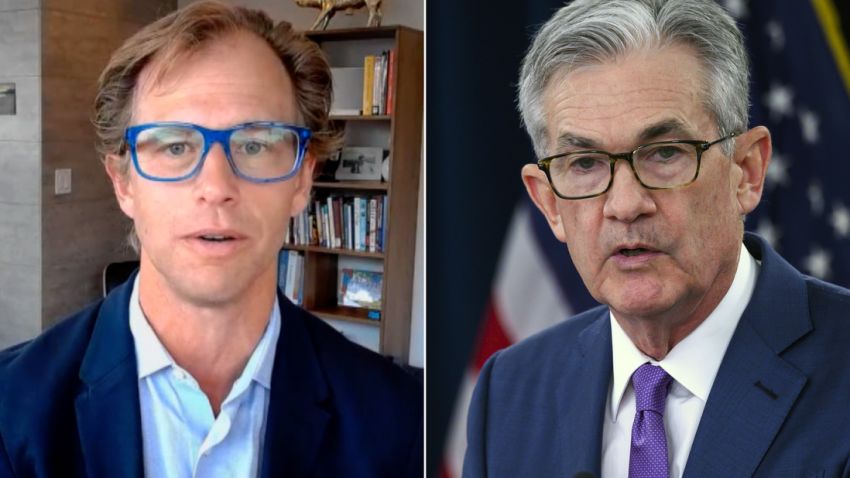
'Both a warning and a threat': Economics professor decodes Fed chair's comments
01:52 - Source: CNN
Markets and Investing 16 videos

'Both a warning and a threat': Economics professor decodes Fed chair's comments
01:52
Now playing
- Source: CNN

'Dr. Doom' explains why the Fed will lose its inflation battle
02:41
Now playing
- Source: CNN Business

Jobs economist: Worker shortage may keep inflation high
01:14
Now playing
- Source: CNN Business

StockX CEO: Here's how we authenticate sneakers, trading cards before sale
01:38
Now playing
- Source: CNN Business

Markets expert: It's time to play defense
01:13
Now playing
- Source: CNN Business
Investor shares 3 things you should do right now in this market

Buying or selling a home? Hear what this economist has to say about prices

Is a recession coming? Look to corporate earnings
4 ways Twitter and Musk court battle could end, explained

Billionaire businessman explains how to invest like the best
Strategist: Here's why the Fed could still pull off a 'soft landing'
01:41
Now playing
- Source: CNN

Klarna CEO on 'buy now, pay later' competition from Apple
02:19
Now playing
- Source: CNN
Strategist explains why you should 'buy stocks when it feels terrible'
Your next subscription could be to Subway. Its CEO explains how it'll work

Walmart vs. Target: A tale of two retail results
02:19
Now playing
- Source: CNN Business

Does Wall Street understand Netflix?
This is an updated version of a story that originally ran on July 21, 2022.
Things were starting to look up for investors. After stocks got clobbered in the first half of the year, they started to stage a comeback, with all major indexes rising for much of June, July and August.
But then Federal Reserve Chairman Jerome Powell spoke at the annual Jackson Hole Economic Symposium last week and strongly indicated that the US central bank would likely raise rates more aggressively than investors expected, and he said that American households can expect "some pain" ahead.
Now stocks appear to be reversing course, having fallen steeply in the wake of Powell's address.
And some analysts say stocks may have further to fall. "Be cautious at this point as it's not entirely clear that the bottom is in for this cycle, let alone for 2022. There will be more volatility to come in the next few months, so caveat emptor," said Chris Zaccarelli, chief investment officer for Independent Advisor Alliance.
While it may be a bumpy road ahead, there are ways to mitigate potential damage to your portfolio in the coming months.
You may be tempted to sell equities and move the proceeds into cash or a money market fund. You'll tell yourself you will move the money back into stocks when things improve. But that will just lock in your losses.
You'll tell yourself you will move the money back into stocks when things improve. But doing so will just lock in your losses.
If you're a long-term investor – which includes even those in their 60s and early 70s because they may be in retirement for 20 or more years – don't expect to outwit the current downward trends.
When it comes to success in investing, "It's not about timing the market. It's about time in the market," said Taylor Wilson, a certified financial planner and president of Greenstone Wealth Management in Forest City, Iowa.
Say you'd invested $10,000 at the start of 1981 in the S&P 500. That money would have grown to nearly $1.1 million by March 31, 2021, according to Fidelity Management & Research. Had you missed just the five best trading days during those 40 years, it would only have grown to roughly $676,000. And if you'd sat out the best 30 days, your $10,000 would only have grown to $177,000.
If you can convince yourself not to sell at a loss, you still may be tempted to stop making your regular contributions for awhile, thinking you're just throwing good money after bad.
"This is a hard one for many people, because the knee-jerk reaction is to stop contributing until the market recovers," said CFP Sefa Mawuli of Pavlov Financial Planning in Arlington, Virginia.
"But the key to 401(k) success is consistent and ongoing contributions. Continuing to contribute during down markets allows investors to buy assets at cheaper prices, which may help your account recover faster after a market downturn."
If you can swing it financially, Wilson even recommends boosting your contributions if you haven't already maxed out. Besides the value of buying more at a discount, he said, taking a positive action step can offset the anxiety that can come from watching your nest egg (temporarily) shrink.
Life happens. Plans change. And so may your time horizon to retirement. So check to see that your current allocation to stocks and bonds matches your risk tolerance and your ideal retirement date.
Do this even if you're in a target date fund, Wilson said. Target date funds are geared toward people retiring around a given year – e.g., 2035 or 2040. The fund's allocation will grow more conservative as that target date nears. But if you're someone who started saving late and who may need to take on more risk to meet your retirement goals, he noted, your current target date fund may not be offering you that.
Mark Struthers, a CFP at Sona Wealth Advisors in Minneapolis, works with 401(k) participants at organizations that hire his firm to provide financial wellness advice.
So he's heard from people across the spectrum who express concerns that they "can't afford to lose" what they have. Even many educated investors wanted out during the downturn early in the pandemic, he said.
While Struthers will counsel them not to panic and explain that downturns are the price investors pay for the big returns they get during bull markets, he knows fear can get the better of people. "You can't just say 'don't sell' because you'll lose some people and they'll be worse off."
So instead he will try to get them to do those things that can assuage their short-term concerns but do the least long-term damage to their nest egg.
For instance, someone may be afraid to take enough risk in their 401(k) investments, especially in a falling market, because they're afraid of losing more and having less of a financial resource if they ever get laid off.
So he reminds them of their existing rainy-day assets, like their emergency fund and disability insurance. He then may suggest they continue to take enough risk to generate the growth they need in their 401(k) for retirement but redirect a portion of their new contributions into a cash-equivalent or low-risk investment. Or he may suggest they redirect the money to a Roth IRA, since those contributions can be accessed without tax or penalty if need be. But it's also keeping the money in a retirement account in the event the person doesn't need it for emergencies.
"Just knowing they have that comfort cash there helps them from panicking," Struthers said.
CNN Business' Paul LaMonica contributed to this report
Source: https://www.cnn.com/2022/08/29/success/investors-how-to-manage-stock-selloff/index.html
0 Response to "So Will Stocks Continue to Slide"
Post a Comment